
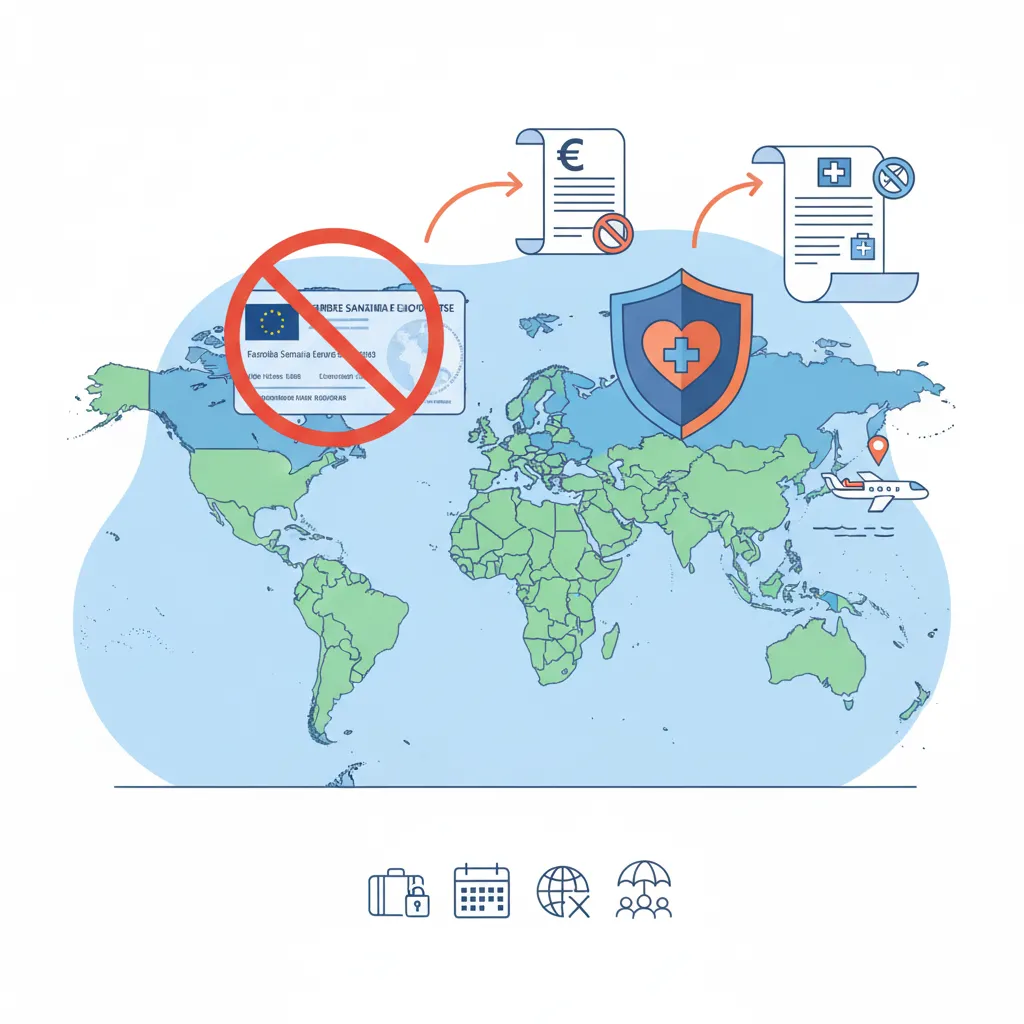
Traveling outside the European Economic Community (EEC), which includes the European Union (EU), Iceland, Liechtenstein, and Norway, automatically means losing the health safety net provided by the European Health Insurance Card (EHIC). Therefore, having travel insurance that covers medical expenses becomes the most important financial protection tool for any international traveler.
1. The Risk of International Health Costs
The main justification for purchasing insurance is the exponential cost of medical assistance outside the EEC. In many developed countries, such as the United States, Canada, or Japan, an emergency hospitalization or a simple procedure can easily reach tens of thousands of Euros.
- Practical Example: Appendicitis or a broken bone in the US can generate bills exceeding $30,000. Without insurance, the traveler must fully bear the debt.
- Copayment Systems: Even in countries with public health systems, like Australia or New Zealand, the foreign traveler may be subject to high copayments or may be referred to private centers, where the cost is borne by them.
2. The Critical Coverage of Medical Repatriation
No public health card, including the EHIC, covers the costs of medical repatriation or evacuation. This is the most expensive and often the most necessary guarantee in the event of a serious accident.
- The Cost of Returning Home: If a traveler suffers a serious incident that prevents them from taking a normal commercial flight, the medical transfer back to their home country in a medicalized aircraft or with specialized health personnel can cost between €25,000 and €150,000, depending on the distance. Travel insurance covers this logistics and cost.
3. Comprehensive Assistance and the Advantage of Not Paying Upfront
A good travel insurance policy not only covers the cost but provides peace of mind and immediate management:
- Direct Management: In an emergency, the traveler only needs to call the insurance central. The company is responsible for directing them to the appropriate hospital and paying expenses directly, preventing the traveler from having to pay large sums of money upfront during a moment of vulnerability.
- Additional Coverages: Travel insurance also includes non-strictly medical services that are vital in an emergency context: lost luggage, trip cancellation due to serious illness, trip interruption, legal defense, and early return due to the death of a family member.